Wood is still the heart of outdoor furniture, but not all hardwoods behave the same way once they leave the workshop. For a buyer building a range, choosing the right species is a balance of weather resistance, price, look and supply. Here is how the main options compare, and what to ask before you commit a container.
The short version: teak sets the standard, acacia and eucalyptus deliver strong value, and the finish and certification behind the timber matter just as much as the species on the label.
Teak: the benchmark
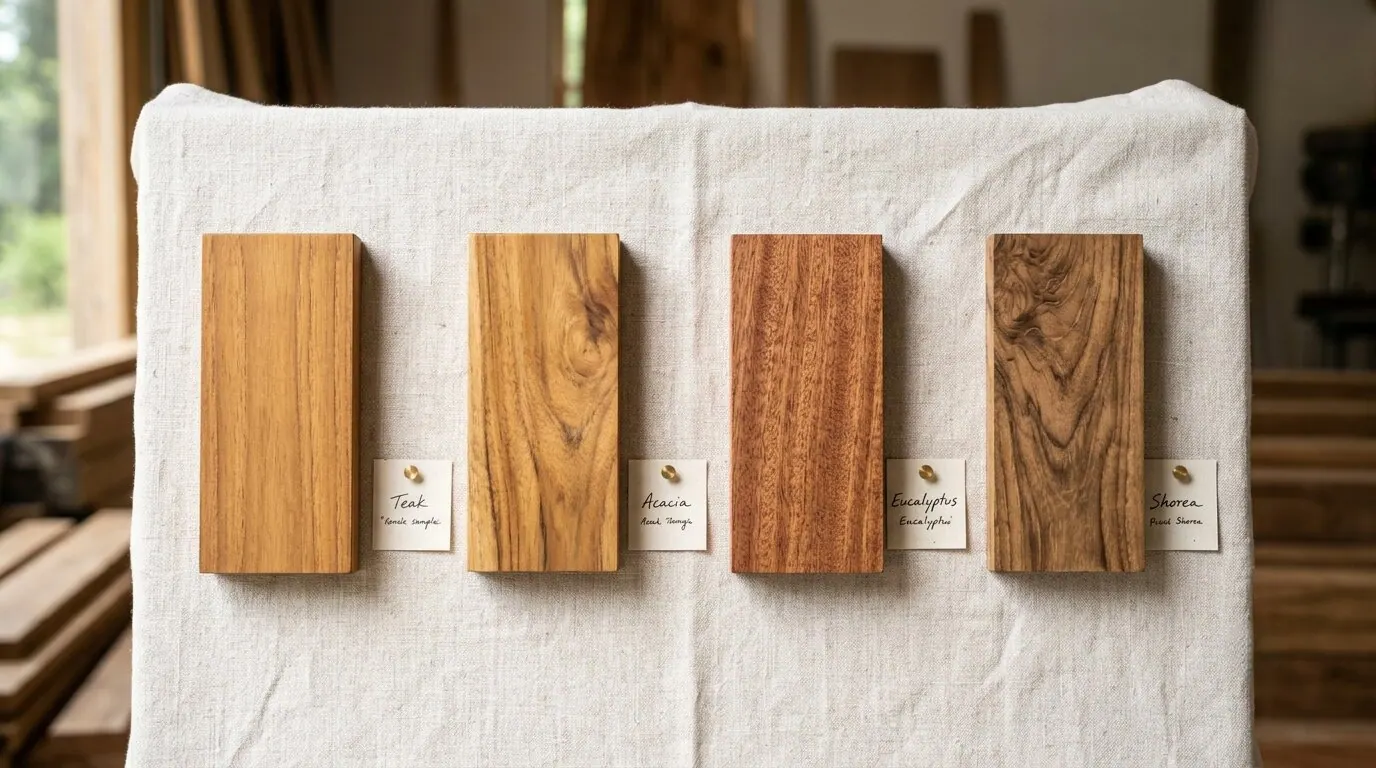
Teak earns its reputation. A naturally high oil content and tight grain make it exceptionally resistant to water, rot and insects, which is why it has been used on boat decks for centuries. Left untreated it weathers to a silvery grey; oiled, it holds a warm honey tone. The trade-off is price and availability, so teak usually anchors the premium end of a range.
When you specify teak, ask about grade and origin. Plantation teak from a traceable, certified source gives you consistency and a clean sustainability story, which matters more to retail customers every year.
Acacia, eucalyptus and shorea
Acacia is dense, hard-wearing and rich in natural oils, with dramatic grain that photographs well. It offers much of teak's durability at a friendlier price, which makes it a workhorse for mid-market dining and lounge ranges. Eucalyptus is fast-growing and sustainable, strong and smooth, and takes finishes nicely, though it needs good sealing to perform long term. Shorea is a dense tropical hardwood, heavy and stable, often used where a teak look is wanted at lower cost.
Whatever the species, performance outdoors comes down to drying, joinery and finish. Properly kiln-dried timber, mortise-and-tenon or doweled joints, stainless hardware and a weather-stable finish will outlast a better species that has been rushed.
Where quality really lives: drying, joinery, hardware
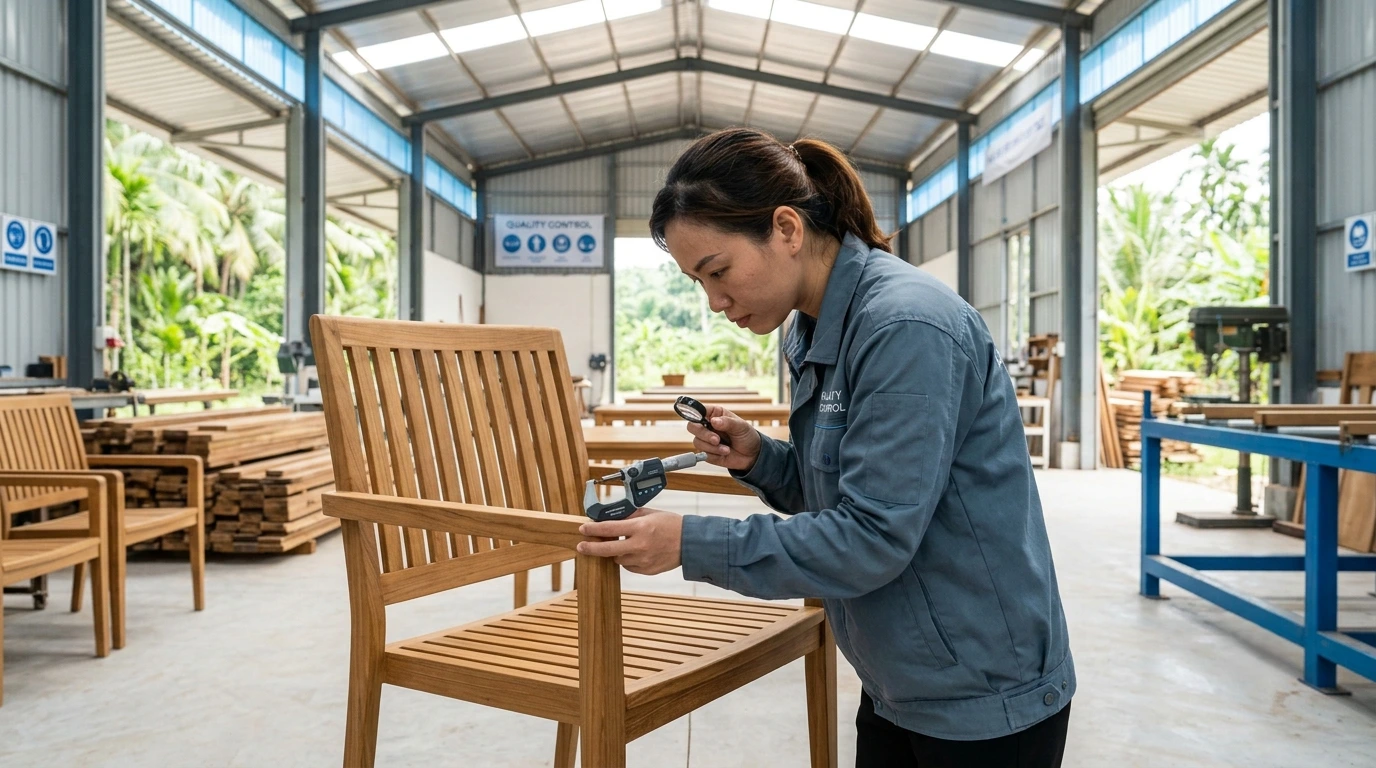
Species gets the headlines, but most field failures in wooden outdoor furniture trace back to process, not wood. Kiln drying is the first checkpoint: timber dried to the right moisture content moves far less as seasons change, which means fewer cracked slats and wobbly joints. Ask a supplier what moisture content they dry to and how they verify it; a confident answer is a good sign.
Joinery is the second. Mortise-and-tenon and doweled joints spread load through the wood itself and survive years of racking forces, while furniture that relies on screws alone works loose. Third is hardware: fittings should be stainless or properly coated, because a rusted bolt will stain and split the timber around it long before the wood itself gives up.
Finish completes the picture. Oiled surfaces are easy to refresh and age gracefully; film-forming lacquers look perfect on day one but can peel outdoors. For retail ranges, an honest finish that customers can maintain usually beats a showroom-perfect one that cannot be repaired.
A buyer's quick checklist
Before committing a container of wooden furniture, five questions cover most of the risk. What species and grade, and is an FSC® or equivalent certificate available for it? What moisture content is the timber dried to? What joinery carries the structural loads? What hardware grade is used, and is it replaceable? And what finish is applied, with what maintenance story for the end customer?
A supplier who answers all five without hesitation is telling you something more valuable than any single answer: that the factory controls its process end to end.
How Gardenline helps
Timber is our largest category, crafted in Vietnam from responsibly sourced hardwoods with FSC®-certified options. We offer custom table sizes, a wide choice of timbers and finishes, and cushions packed to match, so you can tune a range to your market and price point.
If you are weighing species for a new collection, request the catalogue and our team will talk you through the options that fit your program.