Outdoor furniture is built to live outside, but a little care makes a big difference to how long it lasts and how good it looks. The good news is that maintenance is simple, and the right routine depends mostly on the material. Here is a practical guide buyers can pass on to customers.
Across every material the golden rule is the same: clean gently and often, and deal with spills and standing water early.
Timber and aluminium
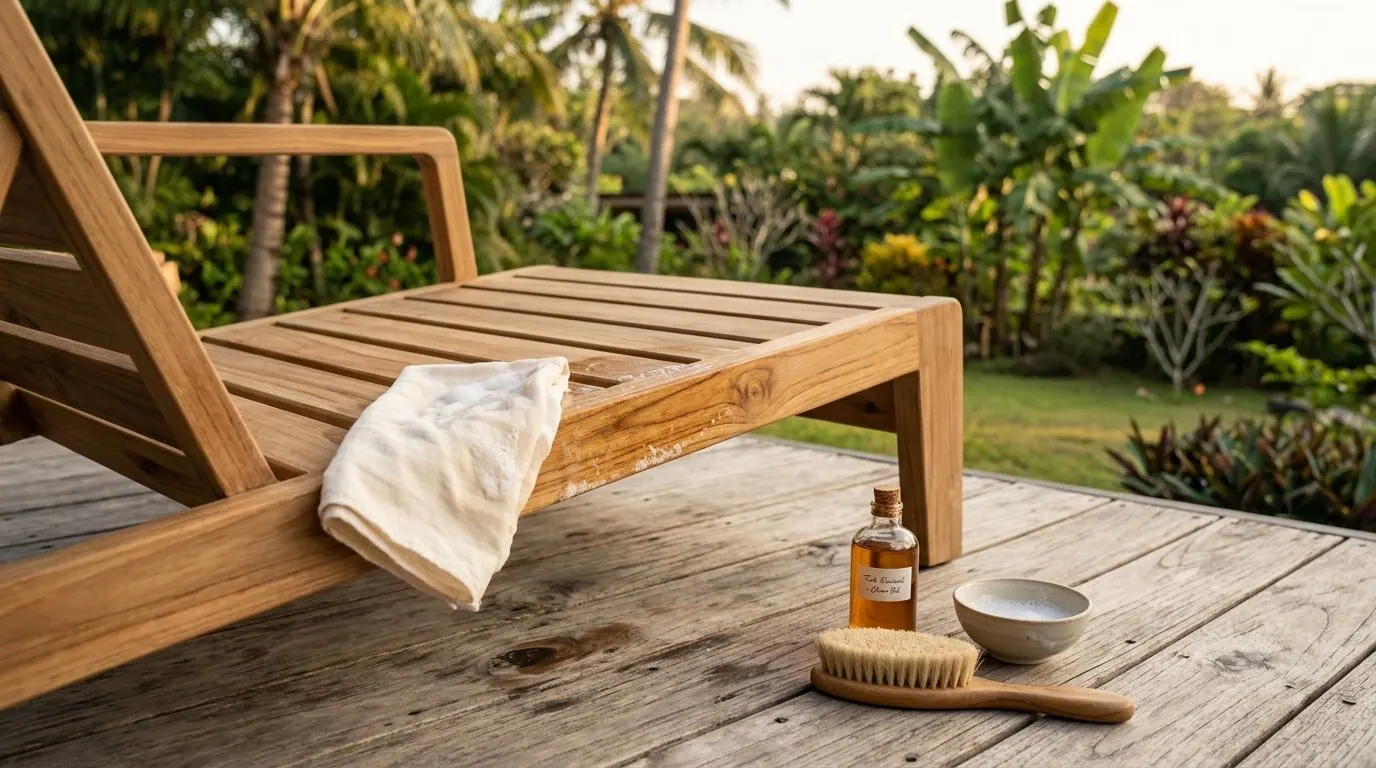
Timber is forgiving. Wash it a couple of times a year with mild soapy water and a soft brush, working along the grain. Teak and other oily hardwoods can be left to weather to a natural silver-grey, or kept warm and golden with a teak oil or sealer applied once or twice a season. Avoid pressure washers, which can lift the grain.
Aluminium is the easiest of all. A wipe with warm soapy water keeps powder-coated frames looking new, and because aluminium does not rust, there is no corrosion to manage. Check that drainage holes stay clear so water does not pool inside tubular frames.
Wicker, cushions and fabrics
All-weather synthetic wicker only needs a rinse and an occasional wipe to clear dust from the weave. A soft brush gets into tight patterns. Unlike natural rattan, quality synthetic wicker will not crack or fade quickly in sun and rain.
Cushions last longest when they can dry out and are not left in constant direct sun. Quick-dry foam and solution-dyed fabrics like acrylic and olefin shrug off the weather, but storing cushions in a box or indoors over winter still adds years. Spot-clean spills early and let everything dry fully before storing.
A simple seasonal calendar
Spring: wash everything before first use, check bolts and re-tighten, and refresh timber with oil if you want the golden tone. Summer: rinse dust and sunscreen off frames and fabrics as you go, and dry cushions before storing them after rain. Autumn: give furniture a final clean, let it dry completely, and store cushions indoors or in a breathable box. Winter: either bring lightweight pieces under cover or use breathable covers; avoid sealed plastic wraps, which trap condensation and do more harm than the weather.
Two mistakes cause most damage we see. The first is pressure washing, which strips finishes, opens timber grain and forces water into joints. The second is leaving cushions compressed and damp in a sealed box, which no fabric survives well. Avoid those two and almost any quality set will age gracefully.
It is also worth reminding customers that weathering is not failure. Teak turning silver-grey is a natural process that does not affect strength, and it can be reversed with a clean and oil if the golden look is preferred.
Built to last in the first place
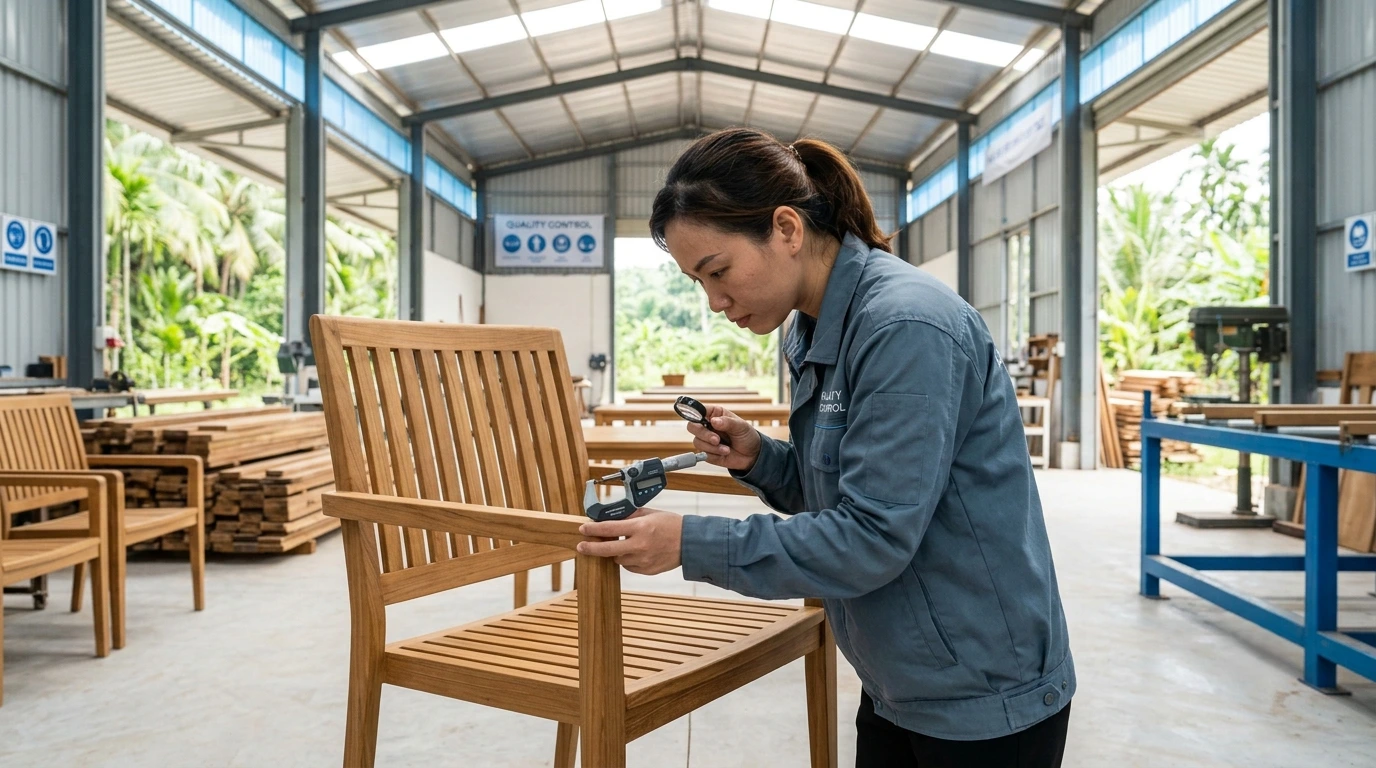
Care only goes so far if the furniture was not made well. Durable joinery, stainless hardware, weather-stable finishes and quick-dry cushions are what let a piece survive years of seasons. We build for exactly that, and inspect every order before it ships.
Planning a range that will hold up in your climate? Request the catalogue and we will help you specify for it.