
The EU Deforestation Regulation, usually shortened to EUDR, is the biggest change to timber compliance in Europe in over a decade. For anyone importing wooden outdoor furniture into the EU, it moves the question from is this timber legal to can you prove where it grew.
This is a practical guide for buyers: what the regulation asks for, who carries the obligation, and what to require from a supplier so your due diligence holds up.
What the regulation requires
EUDR covers a list of commodities including wood, and the products made from them, which means outdoor furniture is firmly in scope. To place those goods on the EU market you must show that they are deforestation-free, that they were produced legally in the country of origin, and that a due-diligence statement has been submitted.
Deforestation-free has a specific meaning: the wood must not come from land deforested after 31 December 2020. Proving that is why the regulation asks for geolocation coordinates of the plots where the timber was harvested, not just a country of origin on an invoice.
Who carries the obligation
The duty falls on the operator who first places the product on the EU market. In practice that is usually the importer, which means the retailer or distributor rather than the factory in Asia. Traders further down the chain have their own record-keeping duties.
This is the part buyers sometimes underestimate. Your supplier can hand you excellent data, but the due-diligence statement and the legal exposure are yours. That makes the quality of what your supplier gives you a commercial risk, not just an administrative one.
What to ask your supplier
Four questions cover most of it. Can you provide geolocation data for the harvest plots behind this product? What documentation shows legal harvest in the country of origin? How is the chain of custody recorded from forest to finished piece? And who in your organisation is responsible for keeping that data current?
Existing certification helps, though it is not a substitute. An FSC® chain of custody does not automatically satisfy EUDR, but a supplier who already runs traceable, documented timber flows is far better placed to produce what the regulation needs than one starting from scratch.
Ask early. Retrofitting traceability onto a supply chain mid-season is slow, and the data has to exist before the container ships, not after.
How we are set up for it
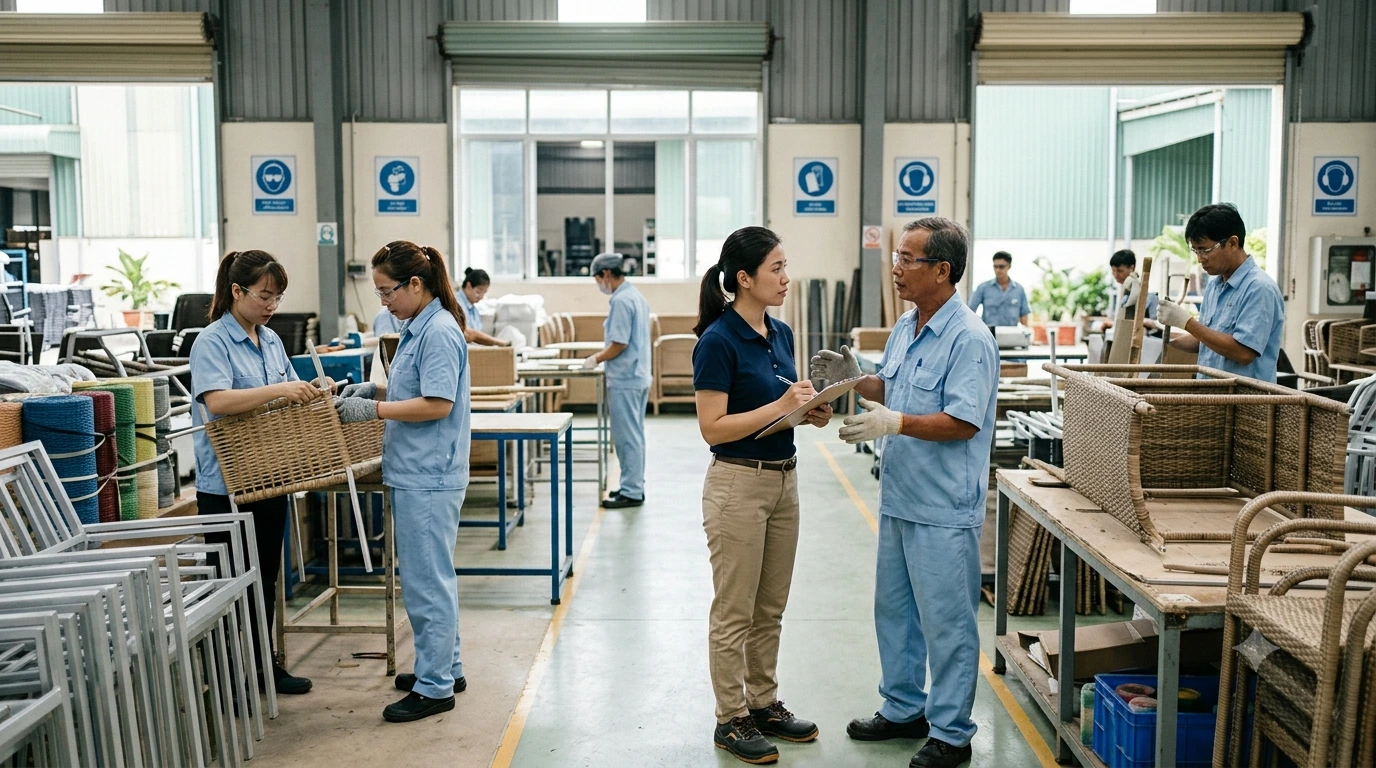
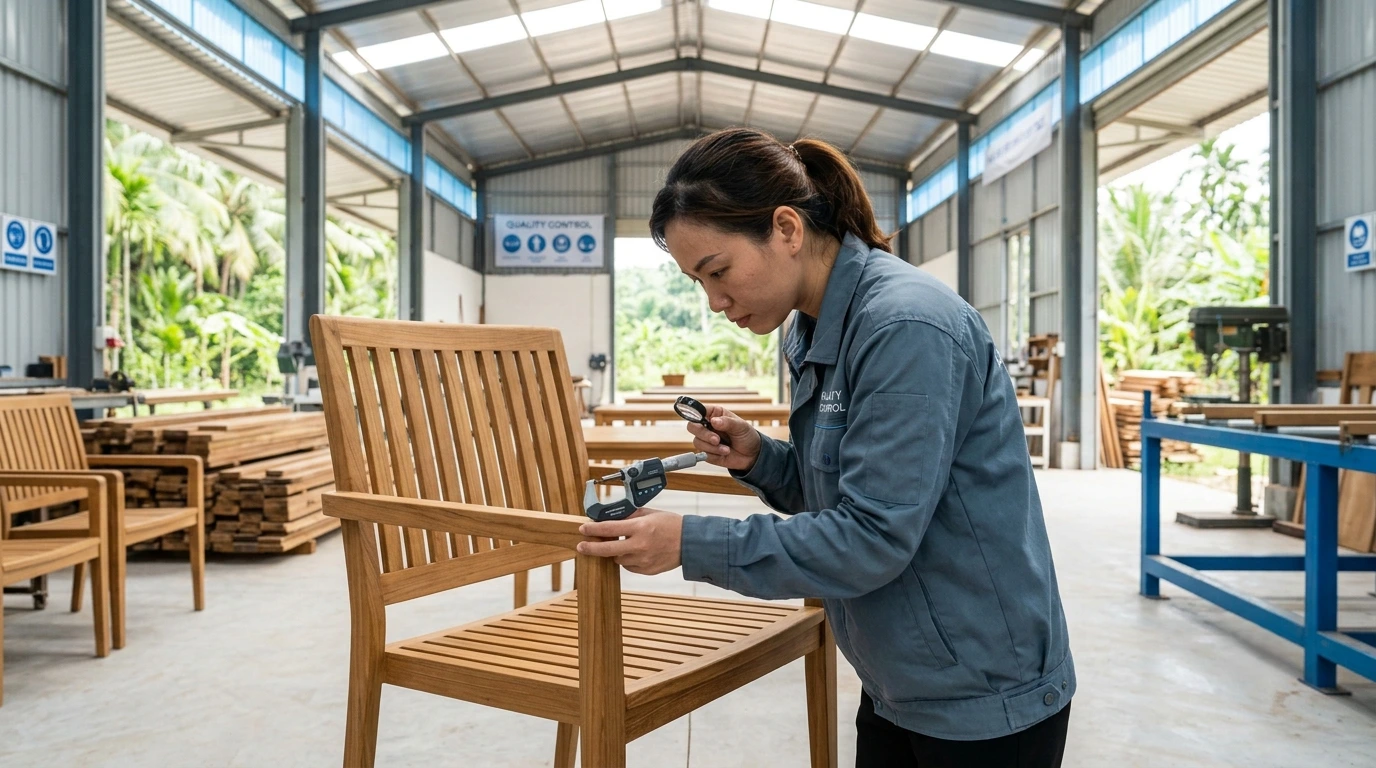
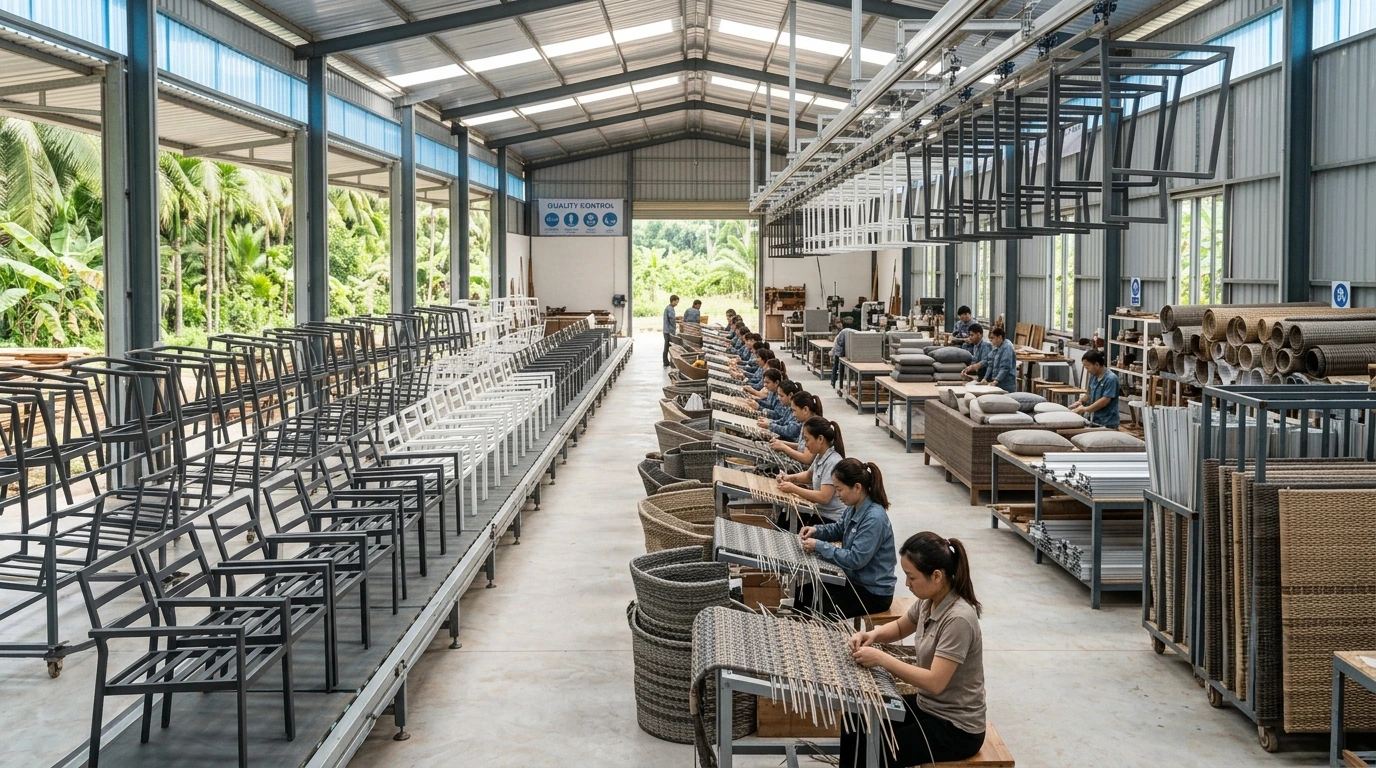
Timber is our largest category and it comes through a traceable supply chain that is FSC® CERTIFIED-FSC®-C105972, developed and made in Vietnam with our own teams handling raw-material buying, factory oversight and quality control. EUDR sits in our certifications row alongside FSC® and BSCI.
If you are preparing EUDR due diligence for an outdoor furniture program, contact us and we will talk you through the documentation we can provide for each timber range.